
St. John’s Centre – Ayres Rd – Prestage St. – OT Creative Space
What we found (or think we found) on our walk.
Cherry, Pear, Ash, Pin Oak?, Red Maple, Sycamore?, Black Locust, Alder, Cherry, Hawthorne, Paper Birch, Cherry, Rowan, Wild Cherry, Black Locust
Below are some notes on each tree. Please note that this is work in progress.
Hopefully there will soon (soonish) be a glossary of terms to explain words such as tannin and mordant.
Some photos would be great too.
1. Cherry (Flowering Cherry)
Corner of St John’s Rd and Ayres Rd
Useful parts for natural dyeing: bark, leaves and fruit.
Cherry bark can give dyes in tones of greyish-brown, yellow, orange or pink. Harvest bark in winter or spring. You can use prunings. Soak in water for several days, weeks or longer, then apply gentle heat. Tannin1 rich and substantive. Alum can brighten pinks.
Leaves can yield yellow in spring and pink when harvested in late summer.
Fruits can yield pink and tan colours.
2. Callery or Bradford Pear
Pyrus calleryana
Along Ayres Rd.
Useful parts for dyeing: bark.
The bark gives browns and tans.
It contains catechic tannins. Catechic tannins are proanthocyanidins or condensed tannins. These introduce red-brown tones to dyes (gallic tannins are clear, tannic acid is yellow to brown).
One of the pear trees had lost a branch to a delivery van. We took this with us and will put it to good use. Growing on the bark is yellow lichen which can also be used as a dye.
3. Common Ash
Fraxinus excelsior
Ayres Rd.
Young ash shoots have a pithy core and are consequently good for making wooden beads and stick pens.
Useful parts for dyeing: bark.
The inner bark can give yellows due to its tannin content.
4. Red Maple
Acer rubrum
Ayres Rd.
Useful parts for dyeing: leaves, bark.
The red leaves (anthrocyanins) can be used for eco-printing with iron to print blue-black (reaction with tannins). In a dye bath they yield yellow-green or red (can be modified with acids and alkalis or darkened with iron). They are best used fresh or in autumn, but not when brown.
Bark …
[not yet complete]
5a. Pin Oak
Quercus palustris
Ayres Rd.
This was not a definitive id as it was based on the bark only and I was sure I could see sycamore keys high up in the tree.
Ordsall Hall a hop, skip and a jump away in Salford has an abundance of very beautiful Pin Oaks if you do want to visit some.
Useful parts for dyeing: bark, leaves, acorns, oak galls.
[not yet complete]
5b. Sycamore
Acer pseudoplatanus
Just in case it is a sycamore and not a pin oak.
Useful parts for dyeing: bark, leaves
The bark yields red-browns.
Autumn leaves create yellows and mustards.
6. Black Locust
Robinia pseudoacacia
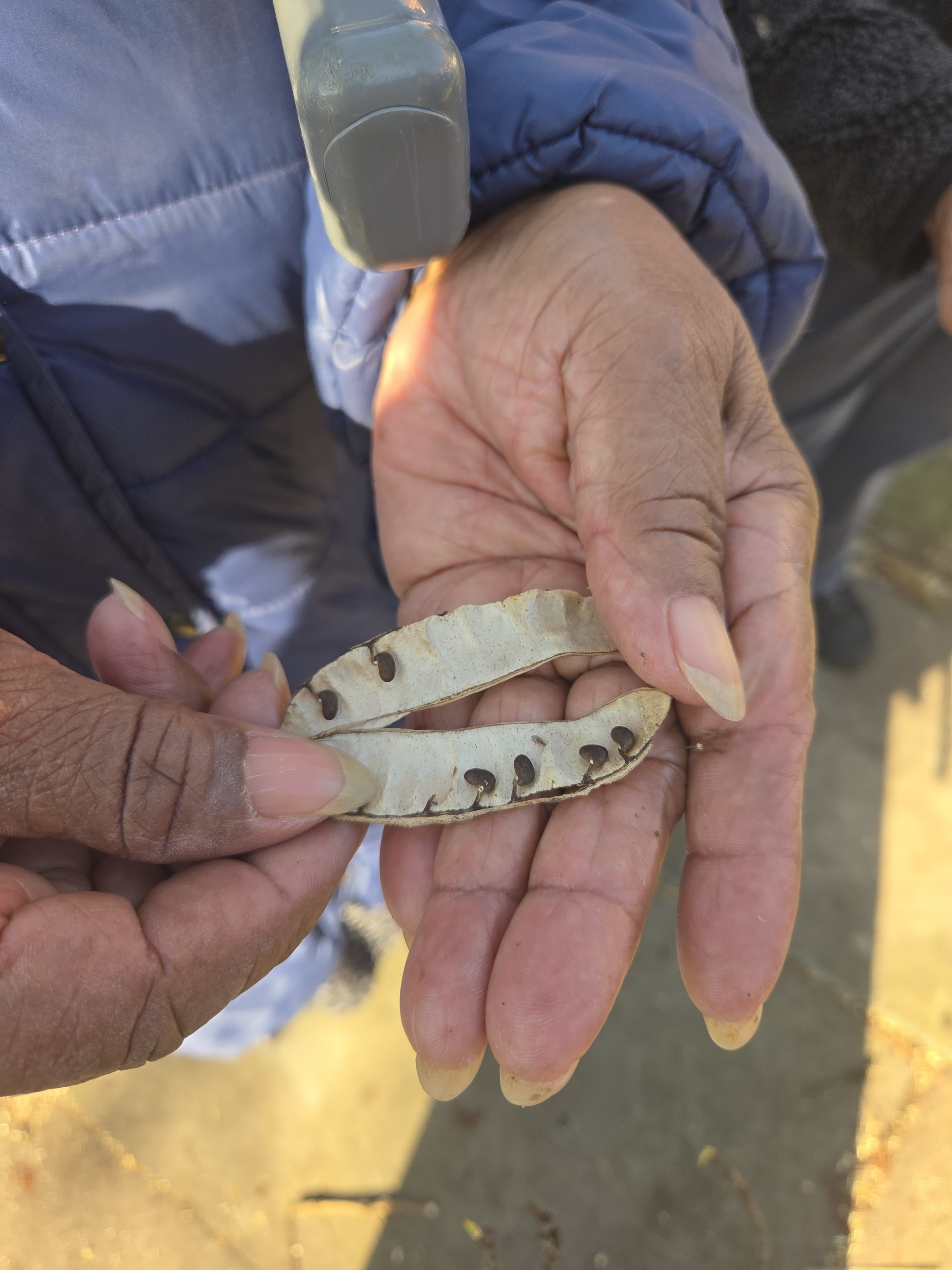
Prestage St.
This tree is a member of the pea (legume) family and has very hard wood.
Useful parts for dyeing: leaves, bark.
The leaves give green-yellow (with an alkali such as potash) and brown to black (with iron). They are purportedly good for eco-printing which we will have to test.
7. Alder
8. Cherry
9. Hawthorne
10. Paper Birch
11. Cherry
12. Rowan
13. Wild Cherry
14. Black Locust
- Tannins act as a natural fixative in dyeing. They can result in long lasting colours on fibres without the need for pretreatment (mordanting). ↩︎
 COMMON CLOTH